In today’s fast-paced digital world, our computer monitors are more than just screens; they are windows to our work, our entertainment, and our connections. As a seasoned expert in computer monitors with over a decade of practical experience, and as a content creator for sbinj.com, I’ve seen firsthand how optimizing your display setup can revolutionize your daily experience. One of the most impactful upgrades you can make is integrating a mountable computer monitor into your workspace. Far from being a mere accessory, a mounted monitor can unlock unparalleled ergonomic benefits, significant space savings, and a noticeable boost in productivity.
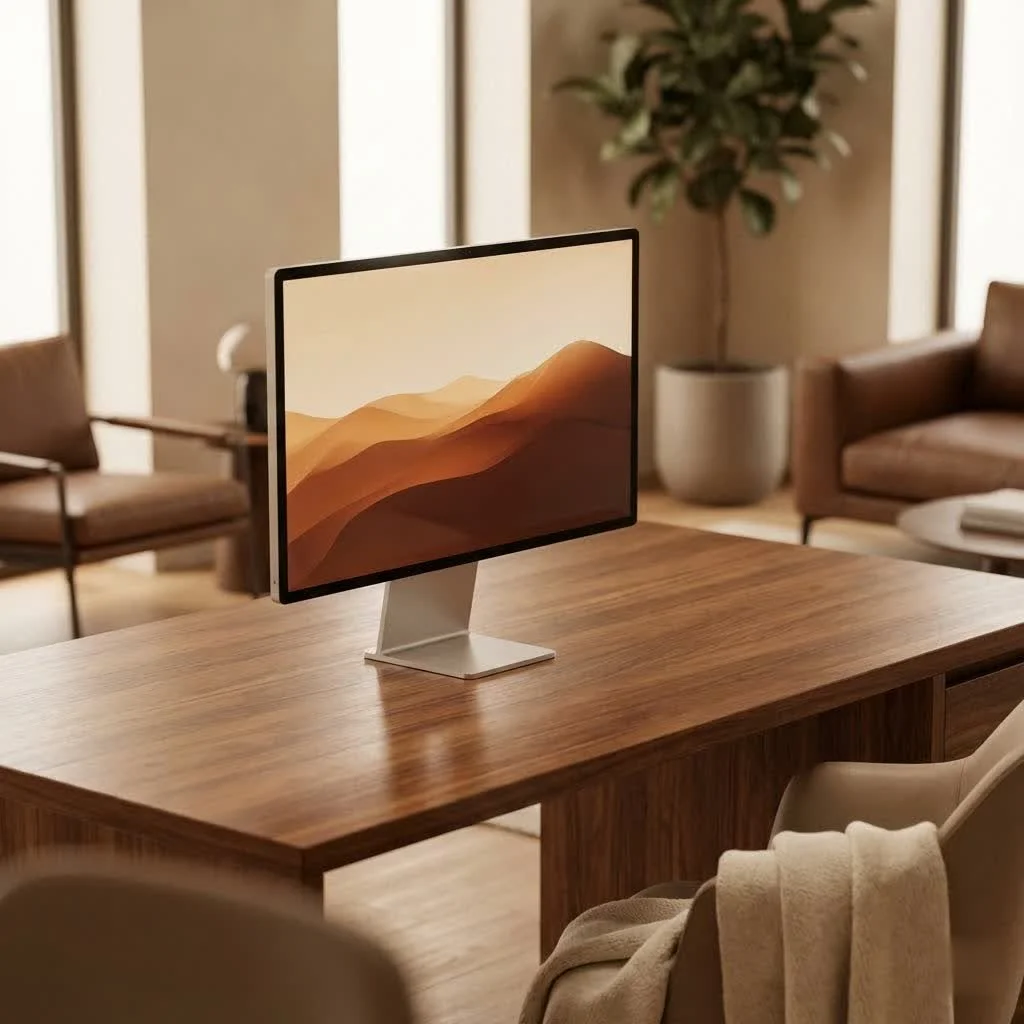
Imagine a desk free from bulky monitor stands, a screen perfectly aligned with your eyesight, and the flexibility to adjust your view with a simple touch. This isn’t just a dream; it’s the reality a mountable computer monitor offers. Let’s dive deep into why this often-overlooked component is crucial for a modern, efficient, and healthy workspace, and how you can choose the ideal solution for your needs.
Why Go Vertical? Unpacking the Benefits of a Mountable Computer Monitor
Embracing a mountable computer monitor is a game-changer for anyone spending significant time in front of a screen. The advantages extend beyond mere convenience, impacting your health, efficiency, and overall workspace environment.
Elevate Your Ergonomics
One of the most compelling reasons to opt for a mountable monitor is the dramatic improvement in ergonomics. Standard monitor stands often limit your ability to achieve an ideal viewing position, forcing you to crane your neck or slouch. A mountable monitor, however, allows for precise adjustments in height, tilt, swivel, and rotation. This means you can effortlessly position your screen directly at eye level, approximately an arm’s length away, with a slight backward tilt to reduce glare. This optimal alignment significantly minimizes neck and back strain, alleviates eye fatigue, and promotes healthier posture during long work sessions. As our esteemed ergonomics specialist, Dr. Anya Sharma, often says, “Investing in proper monitor placement is an investment in your long-term physical well-being. It’s about working smarter, not harder, on your body.”
Reclaim Your Desk Real Estate
Cluttered desks can be a major productivity killer. Traditional monitor stands occupy a surprising amount of valuable surface area. By embracing a mountable computer monitor, you effectively lift your screen off the desk, freeing up precious space for other essentials like notebooks, peripherals, or even a cup of coffee without the fear of knocking over your display. This is particularly beneficial for smaller desks or for those who utilize multiple monitors, where every inch of space counts. A clean desk isn’t just aesthetically pleasing; it can help declutter your mind and foster a more focused work environment.
Boost Your Productivity and Workflow
|
Our Picks for the Best Computer Monitor in 2026
As an Amazon Associate I earn from qualifying purchases.
|
||
| Num | Product | Action |
|---|---|---|
| 1 | Samsung 27\\\" S3 (S32GF) FHD High Resolution 120Hz Monitor with IPS Panel, Flicker Free, Eye Saver Mode, LS27F320GANXZA, 2025 |

|
| 2 | Samsung 32-Inch Flat Computer Monitor, 75Hz, Borderless Display, AMD FreeSync, Game Mode, Advanced Eye Care, HDMI and DisplayPort, LS32B304NWNXGO, 2024 |
|
| 3 | MAFNKOU Portable Monitor Touchscreen 14” 1920 * 1200P Gaming Display,Built-in Stand Speakers HDR IPS External Monitor for Laptop Portable,Travel Monitors for Laptop Mac PC Phone PS4/5 Xbox Switch |
|
| 4 | Samsung 24” (S40GD) Borderless Business Monitor with IPS Panel, 100Hz Refresh Rate, Eye Saver Mode, Ergonomic Design, Game Picture Mode, LS24D402GANXGO, 3 Yr Warranty |
|
| 5 | Philips 221V8LB 22 inch Class Thin Full HD (1920 x 1080) Monitor, 100Hz Refresh Rate, VESA, HDMI x1, VGA x1, LowBlue Mode, Adaptive Sync, 4 Year Advance Replacement Warranty |
|
| 6 | Philips New 27-inch Class Thin Full HD (1920 x 1080) 100Hz Monitor, VESA, HDMI x 1, VGA Port x1, Eye Care, 4 Year Advance Replacement Warranty, 271V8LB, Black |
|
| 7 | Samsung 27\\\" Essential S3 (S36GD) Series FHD 1800R Curved Computer Monitor, 100Hz, Game Mode, Advanced Eye Comfort, HDMI and D-sub Ports, LS27D366GANXZA, 2024 |
|
| 8 | acer 27 Inch Monitor- KB272-27 Inch FHD IPS (1920 x 1080) Display, Up to 120Hz Refresh Rate, 99% sRGB, Tilt, Adaptive-Sync Support (FreeSync Compatible) 1ms (VRB), HDMI & VGA Ports |
|
| 9 | Amazon Basics 24 Inch (23.8 inch viewable) Monitor, FHD 1080P, Max 100Hz, VESA Compatible, Built-in Speakers, Black |
|
| 10 | LG HDMI(2), DP, RS232C in/Out, RJ45 in,IR I |
|
An adjustable, mountable monitor empowers you to tailor your display setup to your exact workflow. Need to review a long document? Rotate your monitor to portrait mode for a more natural reading experience. Collaborating with a colleague? Swivel your screen to share content without anyone having to awkwardly lean in. For multi-monitor users, a mounting system allows for seamless arrangement of multiple screens, creating an expansive and efficient digital canvas that can dramatically increase multitasking capabilities. Studies have consistently shown that optimized multi-monitor setups can lead to substantial gains in productivity, sometimes upwards of 20-30%.
Unlock Unrivaled Flexibility
Whether you prefer to sit, stand, or frequently switch between the two, a mountable monitor provides the flexibility to adapt. With the right mount, you can raise your monitor to eye level for standing work and then lower it just as easily when you choose to sit. This adaptability supports dynamic workspaces and can contribute to better overall health by encouraging movement throughout your day. Many modern mounts also offer full-motion articulation, allowing you to pull your screen closer, push it further away, or position it at virtually any angle you desire.
Aesthetic Appeal: A Cleaner Look
Let’s be honest, a tangled mess of cables and bulky stands can detract from even the most meticulously designed workspace. Mountable computer monitors contribute significantly to a clean, minimalist aesthetic. With integrated cable management systems common in many mounts, you can neatly route power and display cables, transforming your desk into a sleek and sophisticated command center. This isn’t just about appearances; a visually organized space can reduce visual distractions and foster a sense of calm.
The Foundation: Understanding VESA Standards
Before you embark on your journey to acquire a mountable computer monitor, there’s one critical acronym you need to know: VESA.
What is VESA?
VESA stands for the Video Electronics Standards Association, and it’s the industry standard for mounting flat-panel displays, including computer monitors and TVs. This organization established a universal hole pattern and screw size specification for the back of displays, ensuring compatibility between monitors and mounting solutions from different manufacturers. Think of it as a universal language for monitor mounting. If your monitor is “VESA compatible,” it means it has these standard mounting holes.
Common VESA Patterns
VESA patterns are typically measured in millimeters (mm) and denote the horizontal and vertical distance between the four mounting holes on the back of your monitor. The most common patterns you’ll encounter for computer monitors include:
- 75x75mm: Often found on smaller monitors.
- 100x100mm: The most prevalent standard for a wide range of monitors, accommodating displays weighing up to around 30 lbs (14 kg).
- 200x100mm: Used for larger monitors.
- 200x200mm and larger: Typically reserved for very large monitors or TVs.
These patterns are standardized under various VESA Flat Display Mounting Interface (FDMI) categories, such as MIS-D for the common 75x75mm and 100x100mm sizes.
How to Check VESA Compatibility
Determining if your monitor is VESA compatible is straightforward:
- Check Your Monitor’s Manual: The user manual or product specifications should explicitly state VESA compatibility and the specific pattern.
- Look at the Back of Your Monitor: Most VESA-compatible monitors will have four threaded screw holes arranged in a square or rectangular pattern on the back panel. These are usually visible, though sometimes concealed by a removable plate or the original stand’s attachment point.
- Measure: If you can’t find the information, simply measure the horizontal and vertical distances between the centers of these holes in millimeters.
Non-VESA Solutions: Adapters to the Rescue
What if your beloved monitor isn’t VESA compatible? Don’t despair! Some monitors, especially older or certain curved/ultrawide models, might lack these mounting holes. In such cases, non-VESA adapter kits are available. These adapters typically clamp onto your monitor or utilize existing screw points, providing a VESA-compatible plate that can then be attached to a standard mount. It’s a clever way to extend the life and versatility of your existing hardware.
Choosing Your Perfect Mount: A Deep Dive into Types and Features
The world of monitor mounts offers a diverse array of options, each suited to different needs and workspace configurations. Understanding the types and their features is key to making an informed decision for your mountable computer monitor.
Desk Mounts: Clamp, Grommet, and Freestanding
Desk mounts are perhaps the most popular category, offering excellent adjustability and ease of installation for many users.
Clamp Mounts
These mounts attach to the edge of your desk using a C-clamp mechanism. They are incredibly versatile, require no drilling, and can be easily repositioned if you rearrange your workspace. Clamp mounts are a fantastic choice for most standard desks, provided your desk thickness falls within the mount’s supported range.
Grommet Mounts
For a more secure and semi-permanent installation, grommet mounts are ideal. They utilize a bolt that passes through a pre-drilled hole (or an existing cable pass-through) in your desk and is secured from underneath. This method provides superior stability and can often support heavier monitors or multi-monitor setups, while keeping the desk edge clear.
Freestanding Mounts
As the name suggests, freestanding mounts sit directly on your desk surface, often on a heavy, stable base. They are the simplest to install, requiring no clamps or drilling, and are perfect for glass desks or situations where you need to move your monitor frequently. While offering good stability, they might not provide the same level of fine-tuned adjustability or space-saving as clamp or grommet mounts.
Wall Mounts: Maximizing Space
For those aiming to completely clear their desk surface or create a minimalist look, wall mounts are an excellent choice. These mounts attach directly to a wall, typically into a wooden stud for maximum security. Wall mounts offer extreme stability and the ultimate space-saving solution. However, they require careful installation (drilling into walls) and are less flexible for repositioning once installed compared to desk-mounted arms. They are often favored in public spaces or situations where monitor security is paramount.
The Power of the Arm: Gas Spring vs. Mechanical Spring
Many modern monitor mounts, especially articulating desk mounts, incorporate spring mechanisms for effortless adjustment.
- Gas Spring Arms: These utilize a gas cylinder to counterbalance the weight of your monitor, allowing for fluid, smooth, and near-effortless adjustments in height, tilt, and swivel. Once positioned, the monitor stays exactly where you leave it. Gas spring arms are often considered premium options due to their superior adjustability and user experience.
- Mechanical Spring Arms: Also known as spring-assisted arms, these use a series of traditional mechanical springs. While still offering good adjustability and stability, they might require a bit more force to adjust compared to their gas spring counterparts. They often come at a more budget-friendly price point.
Multi-Monitor Magic: Single, Dual, Triple, and Beyond
The beauty of mountable computer monitors is the scalability of your setup.
- Single Monitor Arms: Perfect for optimizing one display, providing full articulation and ergonomic benefits.
- Dual Monitor Arms: These are incredibly popular for enhanced productivity, allowing two monitors to be mounted side-by-side or stacked, all from a single desk clamp or grommet base.
- Triple and Quad Monitor Mounts: For serious multitaskers, gamers, or professionals requiring extensive screen real estate, triple and quad monitor mounts consolidate multiple displays onto a robust, integrated system. This helps maintain a cleaner aesthetic even with numerous screens.
Essential Considerations Before You Buy
Choosing the right mountable computer monitor and its accompanying arm requires a bit of planning. Here are the crucial factors to keep in mind:
Monitor Weight and Size Capacity
This is perhaps the most important consideration. Every monitor mount has a specified weight capacity and screen size range it can safely support. Exceeding these limits can lead to instability, damage to your monitor or mount, and even personal injury. Always check your monitor’s specifications (weight and diagonal size) and ensure the mount you choose is well within those parameters. When in doubt, always opt for a mount with a higher capacity than your monitor requires for added safety and peace of mind.
Adjustability Needs (Tilt, Swivel, Rotate, Height)
Consider how you use your monitor and what level of flexibility you require.
- Height Adjustment: Essential for achieving ergonomic eye-level viewing, especially if you use a standing desk.
- Tilt: Allows you to angle the screen up or down, reducing glare and improving viewing comfort.
- Swivel: Enables horizontal rotation, great for sharing your screen with others or adjusting your view without moving your chair.
- Rotation (Pivot): Lets you switch your monitor from landscape to portrait orientation, which is invaluable for coding, reading long documents, or graphic design.
The more adjustability a mount offers, the more versatile your workspace will be.
Cable Management
A truly optimized setup isn’t just about screen positioning; it’s about managing the inevitable tangle of cables. Look for mounts with integrated cable management channels or clips along the arm or pole. These features allow you to route power, video, and peripheral cables neatly, keeping them out of sight and preventing clutter. Clean cable management not only looks better but also protects your cables from damage and makes future adjustments easier.
Desk Type and Clearance
Before committing to a desk mount, take a moment to assess your desk.
- Desk Thickness: For clamp mounts, ensure your desk’s thickness falls within the mount’s specified range.
- Desk Material: While most desks are compatible, consider if your desk is made of a delicate material like glass, which might be better suited for a freestanding mount or a grommet mount on a non-glass section.
- Rear Clearance: If your desk is pushed against a wall, ensure the chosen mount has enough clearance or features stop mechanisms to prevent the arm from hitting the wall during adjustments. Full-motion arms require more space behind the desk to allow their full range of movement.
Expert Tips for Installation and Setup
Once you’ve chosen your ideal mountable computer monitor and mounting solution, proper installation is paramount to enjoying its full benefits.
Proper Height and Distance
The golden rule of ergonomic monitor setup is positioning the top of your screen at or slightly below eye level when you’re sitting upright. Your monitor should be about an arm’s length away from your eyes. If you have a larger monitor (27 inches or more), you might need to place it slightly further back. Adjust the tilt so that the screen surface is roughly perpendicular to your line of sight, minimizing reflections and eye strain. Don’t be afraid to experiment with these settings until you find what feels most comfortable for your unique body and viewing habits.
Securing Your Investment
Always follow the manufacturer’s installation instructions precisely. For desk clamps, ensure the clamp is tightened securely to prevent wobbling. For grommet mounts, double-check that the bolt is firm. If you’re wall-mounting, ensure you’re drilling into a wall stud or using appropriate heavy-duty anchors for drywall. Your monitor is a significant investment, and a properly installed mount will protect it while enhancing your workspace for years to come.
Frequently Asked Questions (FAQ)
Q1: Is a mountable computer monitor worth it?
Absolutely! A mountable computer monitor is a highly worthwhile investment that significantly improves ergonomics, saves valuable desk space, boosts productivity, and enhances the overall aesthetics of your workspace. The ability to customize your viewing position can drastically reduce strain and discomfort during long hours.
Q2: Can any monitor be mounted?
Most modern monitors are VESA compatible, meaning they have a standardized four-hole pattern on the back for mounting. However, some older, smaller, or specialized monitors may not be. You can check your monitor’s manual or visually inspect the back for these holes. For non-VESA monitors, adapter kits are available.
Q3: What’s the difference between a desk clamp and a grommet mount?
A desk clamp mount attaches to the edge of your desk using a C-clamp, requiring no drilling and allowing for easy repositioning. A grommet mount, on the other hand, secures through a hole in your desk (either pre-drilled or one you create), offering a more stable and permanent installation.
Q4: How do I find my monitor’s VESA size?
Your monitor’s VESA size (e.g., 75x75mm, 100x100mm) is usually listed in the product manual or specifications. You can also find it by measuring the horizontal and vertical distances between the centers of the four mounting holes on the back of your monitor in millimeters.
Q5: Do monitor mounts improve posture?
Yes, monitor mounts significantly improve posture by allowing you to position your screen at an ergonomically correct height and distance. This reduces the tendency to hunch over or strain your neck and back, encouraging a more natural and comfortable sitting or standing posture.
Q6: Can I use a mount with a standing desk?
Absolutely! Mountable computer monitors are an ideal companion for standing desks. An adjustable monitor arm allows you to effortlessly raise and lower your screen to maintain proper ergonomic alignment whether you’re sitting or standing, making the transition seamless and enhancing the benefits of your adjustable workstation.
The Future of Your Workspace is Up
Integrating a mountable computer monitor into your workspace is one of the smartest upgrades you can make for your productivity, health, and overall comfort. By understanding the benefits, navigating VESA standards, and choosing the right mount type for your needs, you’re not just buying a piece of hardware; you’re investing in a more efficient, ergonomic, and enjoyable daily experience. Take the leap, free your desk, and elevate your view. Your neck, your eyes, and your workflow will thank you. Explore the possibilities at sbinj.com for more expert insights into building your ultimate computer monitor setup.
Get our weekly buyer guide
Practical specs, not advice. Unsubscribe anytime.