Flat screen computer monitors remain a cornerstone of digital life due to their unparalleled versatility, affordability, and visual precision, making them the preferred choice for millions of users. Unlike curved displays, flat screens eliminate image distortion, which is crucial for tasks demanding absolute precision like graphic design or architecture. They also offer budget-friendly entry points into high-quality displays and enable seamless multi-monitor setups, providing a cohesive and expansive workspace.
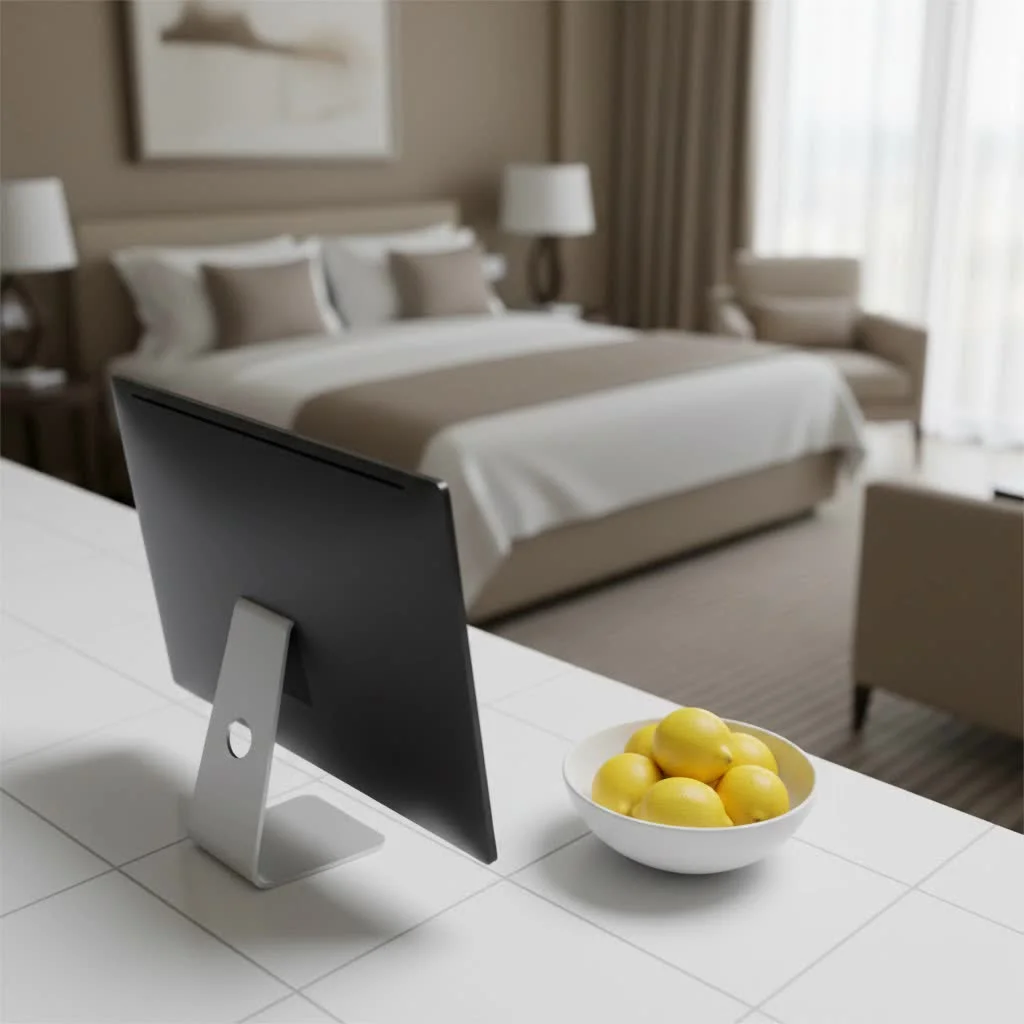
Why Flat Screen Monitors Still Reign Supreme for Many Users
Flat screen monitors, the traditional design we’ve all grown up with, hold a significant place in the market for good reason. Their straightforward design translates into a host of practical advantages that cater to a wide range of users and applications.
The Practicality of a Flat View
|
Our Picks for the Best Computer Monitor in 2026
As an Amazon Associate I earn from qualifying purchases.
|
||
| Num | Product | Action |
|---|---|---|
| 1 | Samsung 32-Inch Flat Computer Monitor, 75Hz, Borderless Display, AMD FreeSync, Game Mode, Advanced Eye Care, HDMI and DisplayPort, LS32B304NWNXGO, 2024 |

|
| 2 | acer 27 Inch Monitor- KB272-27 Inch FHD IPS (1920 x 1080) Display, Up to 120Hz Refresh Rate, 99% sRGB, Tilt, Adaptive-Sync Support (FreeSync Compatible) 1ms (VRB), HDMI & VGA Ports |
|
| 3 | Samsung 27\\\" S3 (S32GF) FHD High Resolution 120Hz Monitor with IPS Panel, Flicker Free, Eye Saver Mode, LS27F320GANXZA, 2025 |
|
| 4 | Philips 221V8LB 22 inch Class Thin Full HD (1920 x 1080) Monitor, 100Hz Refresh Rate, VESA, HDMI x1, VGA x1, LowBlue Mode, Adaptive Sync, 4 Year Advance Replacement Warranty |
|
| 5 | Samsung 27\\\" Essential S3 (S36GD) Series FHD 1800R Curved Computer Monitor, 100Hz, Game Mode, Advanced Eye Comfort, HDMI and D-sub Ports, LS27D366GANXZA, 2024 |
|
| 6 | Amazon Basics 24 Inch (23.8 inch viewable) Monitor, FHD 1080P, Max 100Hz, VESA Compatible, Built-in Speakers, Black |
|
| 7 | Samsung 24” (S40GD) Borderless Business Monitor with IPS Panel, 100Hz Refresh Rate, Eye Saver Mode, Ergonomic Design, Game Picture Mode, LS24D402GANXGO, 3 Yr Warranty |
|
| 8 | Philips New 27-inch Class Thin Full HD (1920 x 1080) 100Hz Monitor, VESA, HDMI x 1, VGA Port x1, Eye Care, 4 Year Advance Replacement Warranty, 271V8LB, Black |
|
| 9 | MAFNKOU Portable Monitor Touchscreen 14” 1920 * 1200P Gaming Display,Built-in Stand Speakers HDR IPS External Monitor for Laptop Portable,Travel Monitors for Laptop Mac PC Phone PS4/5 Xbox Switch |
|
| 10 | LG HDMI(2), DP, RS232C in/Out, RJ45 in,IR I |
|
One of the most compelling reasons to choose a flat screen monitor is its inherent practicality. Unlike their curved counterparts, flat screens eliminate any potential for image distortion, which is crucial for tasks demanding absolute precision. Imagine being a graphic designer trying to draw a straight line on a curved canvas, or an architect ensuring blueprints are perfectly aligned – flat screens deliver that true-to-life, undistorted representation. This also means images appear consistent from edge to edge, ensuring that what you see is precisely what’s intended. For anyone involved in design, photography, or any detailed visual work, a flat panel is often the undisputed champion.
Budget-Friendly Brilliance
Let’s talk about value. Flat screen monitors typically offer a more budget-friendly entry point into high-quality displays compared to their curved counterparts. Advancements in manufacturing have made these monitors incredibly affordable, without compromising on essential features like good picture quality and energy efficiency. This accessibility makes them an excellent choice for students, home office setups, or anyone looking to maximize their display real estate without breaking the bank. You can find robust flat screen options packed with features for everyday computing, general business tasks, and even light gaming at a very reasonable price.
Seamless Multi-Monitor Setups
If your workflow thrives on multitasking, a multi-monitor setup is probably your best friend. And when it comes to arranging multiple screens, flat monitors are unequivocally superior. Their uniform edges allow for seamless alignment, creating a cohesive and expansive workspace. Trying to daisy-chain curved monitors can be a visual and ergonomic nightmare, often resulting in awkward gaps and misaligned perspectives. With flat screens, you can effortlessly extend your desktop across two, three, or even more displays, making it ideal for managing multiple applications, spreadsheets, or design elements side-by-side.
Flat vs. Curved: Understanding the Key Differences for Your Setup
The flat versus curved debate is ongoing, but for “flat screen computer monitor” enthusiasts, the distinctions are clear and often favor the traditional design for specific use cases. While curved monitors offer a more immersive experience, especially for single-user gaming or movie watching by expanding peripheral vision, flat monitors excel in other critical areas.
Visual Precision for Professional Tasks
For professionals, visual accuracy is paramount. Flat monitors present images and lines without any inherent geometric distortion that can sometimes be introduced by a curved panel. This makes them indispensable for graphic designers, architects, engineers, and anyone working with CAD software, photography, or video editing, where true straight lines and accurate proportions are non-negotiable. “When your livelihood depends on precise visual representation, a flat screen monitor ensures that every pixel is exactly where it should be, without any optical trickery,” observes Dr. Evelyn Reed, a renowned display technology analyst.
Ergonomics and Eye Comfort
While some argue that curved monitors reduce eye strain by maintaining a more uniform distance from the eye, flat monitors can be equally comfortable with proper ergonomic setup. Factors like screen size, resolution, and brightness play a more significant role in eye comfort than curvature alone. The key is ensuring your monitor is at the correct height and viewing distance. For sharing your screen with colleagues or family, flat monitors provide consistent viewing angles for everyone, preventing distortion for those not seated directly in the center.
Installation and Space Management
Flat monitors are inherently easier to mount on walls or monitor arms and integrate into existing desk setups. Their slim profiles take up less desk space and offer more flexibility in placement. Curved monitors, due to their shape, often require special mounts and more desk space, making them a less flexible option for compact workstations or for those who frequently reconfigure their setup.
Decoding the Specs: What to Look for in a Flat Screen Monitor
Choosing the right flat screen computer monitor means understanding the technical specifications that define its performance and suitability for your tasks.
Display Technology and Panel Types
Modern flat screen monitors primarily use LCD (Liquid Crystal Display) technology, often backlit by LEDs. While all LED monitors are technically LCDs, the LED backlighting offers superior contrast, color accuracy, thinner designs, and better energy efficiency than older CCFL (cold cathode fluorescent lamp) backlit LCDs.Within LCD technology, you’ll encounter different panel types:
- IPS (In-Plane Switching): Known for excellent color accuracy and wide viewing angles, making them ideal for graphic design and general multimedia consumption. Many budget IPS panels are now available.
- VA (Vertical Alignment): Offers superior contrast ratios and deeper blacks than IPS, but viewing angles might be slightly narrower. Great for movie watching and casual gaming.
- TN (Twisted Nematic): The fastest panel type in terms of response time, making it a favorite for competitive gamers who prioritize speed above all else. However, color reproduction and viewing angles are generally the weakest.
High-end monitors might also feature OLED (Organic Light-Emitting Diode) technology, which offers unparalleled black levels and vibrant colors by individually lighting pixels. Some even use QD-OLED (Quantum Dot OLED) for enhanced color accuracy and brightness.
Resolution, Refresh Rate, and Response Time
These three metrics are crucial for your visual experience:
- Resolution: The number of pixels a monitor displays (e.g., 1920×1080 Full HD, 2560×1440 QHD/2K, 3840×2160 UHD/4K). Higher resolution means sharper images and more screen real estate. For a 27-inch monitor, 4K resolution is a popular sweet spot for most users.
- Refresh Rate: Measured in Hertz (Hz), this indicates how many times per second the screen updates the image. A standard 60Hz is fine for everyday tasks, but gamers will want 120Hz, 144Hz, 240Hz, or even higher for smoother motion.
- Response Time: Measured in milliseconds (ms), this is how quickly pixels can change color. Lower numbers (1ms to 5ms) are better for fast-paced gaming to prevent motion blur and ghosting.
Connectivity and Ergonomics
Don’t overlook these practical considerations:
- Connectivity: Ensure your monitor has the right ports for your devices. Common options include HDMI (standard for most devices), DisplayPort (higher bandwidth for high refresh rates), and USB-C (for video, data, and power delivery). Older VGA and DVI ports are less common but still found on some budget models.
- Ergonomics: A good stand that allows for height, tilt, and swivel adjustments is invaluable for comfort and preventing strain during long sessions. Some advanced stands even allow pivot (rotating the screen to portrait orientation).
Choosing the Right Flat Screen Monitor for Your Needs
The “best” flat screen monitor really depends on what you plan to do with it.
For Everyday Use and Home Offices
For general computing, web browsing, email, and basic productivity, a 24-inch or 27-inch flat screen monitor with Full HD (1920×1080) or QHD (2560×1440) resolution and an IPS panel is usually an excellent choice. Look for a refresh rate of 60Hz or 75Hz, and make sure it has the necessary connectivity (HDMI, DisplayPort) and a comfortable, adjustable stand. These models offer a great balance of performance and affordability.
For Creative Professionals and Designers
If your work demands color accuracy and fine detail, prioritize an IPS panel with high resolution (QHD or 4K) and excellent color gamut coverage (e.g., close to 100% sRGB, Adobe RGB, or DCI-P3). A larger screen size (27-inch to 32-inch) will provide ample workspace. Features like factory calibration and uniform brightness are also important. Flat screens are particularly well-suited for this audience due to the absence of geometric distortion.
For Gamers: Flat Screens in a Curved World
While curved monitors offer immersion, flat screens hold their own, especially for competitive gaming where an undistorted view is critical. Look for a flat screen with a high refresh rate (144Hz or higher), a low response time (1ms to 5ms gray-to-gray), and adaptive sync technology (AMD FreeSync or NVIDIA G-Sync) to eliminate screen tearing. IPS or Fast IPS panels offer a great balance of speed and visual quality for modern gaming.
Flat Screen Monitor Care and Maintenance
To ensure your flat screen computer monitor provides years of reliable service, a little care goes a long way. Always use a soft, microfiber cloth to gently wipe the screen, avoiding harsh chemicals that can damage the display coating. For stubborn smudges, a specialized screen cleaner or a slightly damp cloth with distilled water can work wonders. Keep your monitor’s vents clear of dust to prevent overheating, and ensure proper cable management to reduce strain on ports and prevent accidental disconnections.
Frequently Asked Questions About Flat Screen Computer Monitors
Q: Are flat screen monitors better for your eyes than curved monitors?
A: While some suggest curved monitors might reduce eye strain by keeping the entire screen at a uniform distance from your eyes, flat monitors are generally just as good for eye comfort, provided you maintain proper ergonomics like viewing distance, height, and brightness.
Q: Can I use a flat screen monitor for gaming?
A: Absolutely! Flat screen monitors are excellent for gaming, especially for competitive players who prefer an undistorted view. Look for high refresh rates (144Hz+), low response times (1ms-5ms), and adaptive sync technologies (FreeSync/G-Sync) for the best experience.
Q: Why are flat screen monitors often recommended for graphic design?
A: Flat screen monitors are recommended for graphic design because they present images and lines without any geometric distortion, ensuring accurate representation of your work. This precision is vital for tasks where straight lines and accurate proportions are critical.
Q: What is the ideal resolution for a flat screen monitor?
A: The ideal resolution depends on screen size and usage. For a 24-inch monitor, Full HD (1080p) is common. For 27-inch and above, QHD (1440p) or 4K (2160p) offer significantly sharper images and more workspace, especially for productivity and creative tasks.
Q: How do I connect multiple flat screen monitors to my computer?
A: You can connect multiple flat screen monitors using various video ports like HDMI, DisplayPort, or USB-C. Modern graphics cards typically have multiple output ports. You may also use docking stations or monitor daisy-chaining (if supported) for a cleaner setup.
Q: Is OLED technology available in flat screen computer monitors?
A: Yes, OLED technology is increasingly available in flat screen computer monitors, particularly in high-end models. These offer superior contrast, true blacks, and vibrant colors, making them highly sought after by gamers and creative professionals.
The Future is Flat (and Sometimes Curved): Our Concluding Thoughts
The flat screen computer monitor, a product of continuous refinement and technological prowess, remains a vital piece of our digital landscape. Its enduring popularity is a testament to its practical advantages: affordability, superior visual precision for a multitude of tasks, and seamless integration into multi-monitor setups. While curved displays offer a different flavor of immersion, the flat screen stands firm as the reliable workhorse, the precise canvas, and the versatile companion for every computing need. At Sbinj.com, we champion informed choices, and for many, the flat screen computer monitor isn’t just a choice—it’s the smart choice.
Frequently Asked Questions
- Are flat screen monitors better for your eyes than curved monitors?
- Flat monitors are generally just as good for eye comfort as curved monitors, provided you maintain proper ergonomics. Factors like viewing distance, monitor height, and brightness play a more significant role in reducing eye strain than screen curvature alone.
- Can I use a flat screen monitor for gaming?
- Absolutely, flat screen monitors are excellent for gaming, especially for competitive players who prioritize an undistorted view. For the best experience, look for models with high refresh rates (144Hz or higher), low response times (1ms-5ms), and adaptive sync technologies like FreeSync or G-Sync.
- Why are flat screen monitors often recommended for graphic design?
- Flat screen monitors are recommended for graphic design because they present images and lines without any geometric distortion. This ensures an accurate representation of your work, which is vital for tasks where precise straight lines and accurate proportions are critical, such as CAD or photo editing.
- What is the ideal resolution for a flat screen monitor?
- The ideal resolution depends on screen size and intended use. For a 24-inch monitor, Full HD (1920x1080) is common. For 27-inch and larger displays, QHD (2560x1440) or 4K (3840x2160) resolutions offer significantly sharper images and more screen real estate, particularly beneficial for productivity and creative tasks.
- How do I connect multiple flat screen monitors to my computer?
- You can connect multiple flat screen monitors using various video ports such as HDMI, DisplayPort, or USB-C, as modern graphics cards typically have multiple output ports. For a cleaner setup, you may also use docking stations or monitor daisy-chaining if supported by your hardware.
- Is OLED technology available in flat screen computer monitors?
- Yes, OLED technology is increasingly available in flat screen computer monitors, particularly in high-end models. These monitors offer superior contrast, true blacks, and vibrant colors, making them highly sought after by gamers and creative professionals who demand top-tier visual performance.

I’ve been using a flat screen monitor for years, and this guide really hit the nail on the head about why they’re still so good. I do a lot of graphic design work, and the lack of image distortion is absolutely critical for me. My current setup is perfect for color accuracy and detail, which is something I just don’t think I’d get with a curved display. Highly recommend sticking with flat for any precision tasks.
While I appreciate the budget-friendly entry point of flat screens, I did notice a slight issue with glare in my brightly lit room. It’s not a deal-breaker, but I sometimes have to adjust my seating to avoid reflections. For general use, it’s fine, but I might look into a monitor with better anti-glare coating next time, even if it costs a bit more.
I recently upgraded my old monitor to a new flat screen, and the visual precision is incredible. I use my computer for architectural drafting, and every line and detail is super crisp. It’s exactly what I needed to ensure accuracy in my projects. Definitely agree that flat screens are the way to go for professional applications.
Got a new flat screen monitor after reading about the benefits for multi-monitor setups. It’s been a game-changer for my home office! Having two screens side-by-side with no weird gaps or viewing angles makes my workflow so much smoother. The affordability aspect mentioned was also a big plus, allowing me to get two decent monitors without breaking the bank.